
THE DESTINATION REPORT / WORLD WANDER LEDGER
Hyper Light Drifter
A visually memorable expedition through an evocative ruined world. Branching routes and practical discoveries reward curiosity, while demanding action and limited explanation make the journey deliberately resistant.
Game facts
- Developer
- Heart Machine
- Publisher
- Heart Machine
- Released
- 31 March 2016
- Platforms
- Windows · macOS · Linux (Steam edition)
- Model
- Paid game
- PEGI
- 12 — Nintendo Switch Special Edition edition; not a separate PC classification
- Players
- Single-player · Multi-player · Shared/Split Screen PvP · Co-op · Shared/Split Screen Co-op
- Length
- Short
- Difficulty
- 4 / 5 · Challenging
- Steam Deck
- Verified
PEGI source ↗ · Steam Deck status source ↗
Edition: Base game
The score, explained
The interest and responsiveness of the core decisions and actions.
How progression, exploration and goals fit together.
The coherence of the visual, musical and narrative presentation.
How clearly the game explains its rules and offers useful ways to engage.
The depth of optional goals, alternative approaches and reasons to return.
Danger is part of the exploration
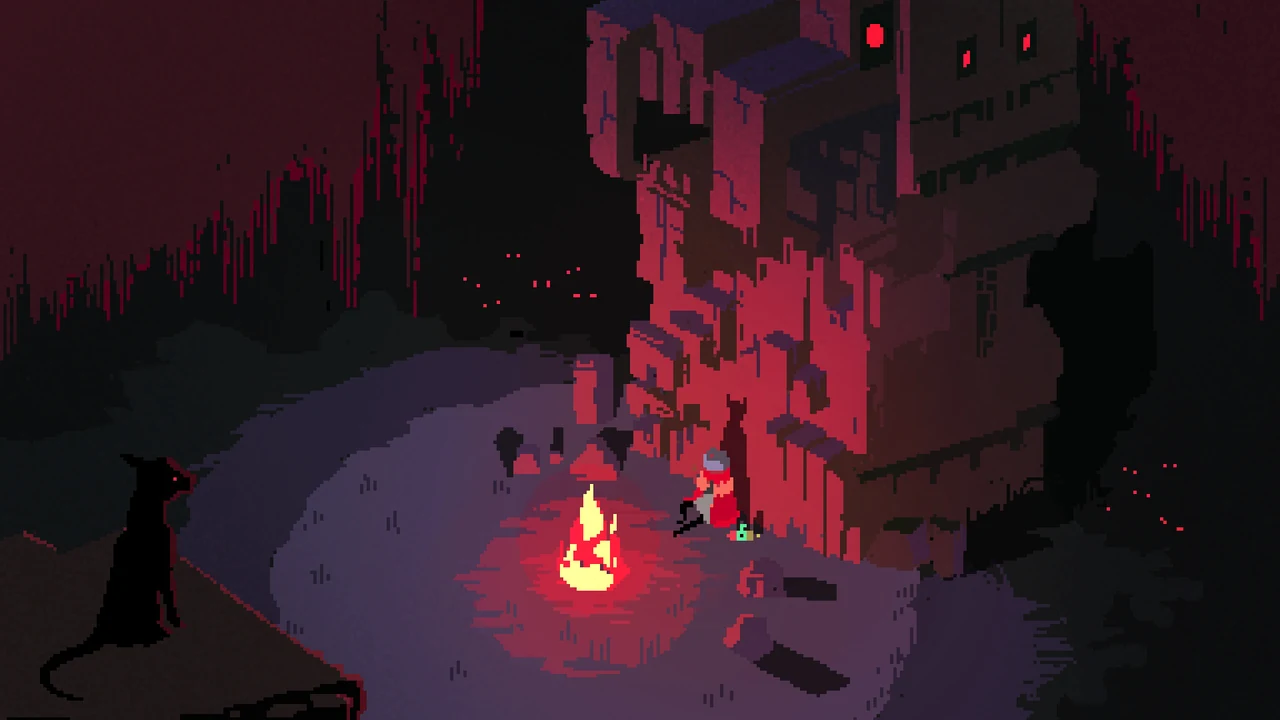
Hyper Light Drifter begins with a ruined world that communicates more through images than explanation. Leaving its central refuge reveals branching routes, hostile encounters and landmarks whose significance is not immediately clear. The opening asks the explorer to accept uncertainty about both the setting and the practical way forward. Visual memory becomes useful quickly: a blocked connection, unusual structure or promising edge may deserve another visit after the player's capabilities improve. Combat is an immediate part of this investigation, making each expedition a balance between curiosity and survival. The protagonist's vulnerability prevents the landscape from feeling like a passive gallery, however striking its colours may be. The first stage is therefore about establishing a relationship with a difficult place, learning enough of its routes and dangers to venture farther without expecting the world to explain itself completely.
Finding a route without a long explanation
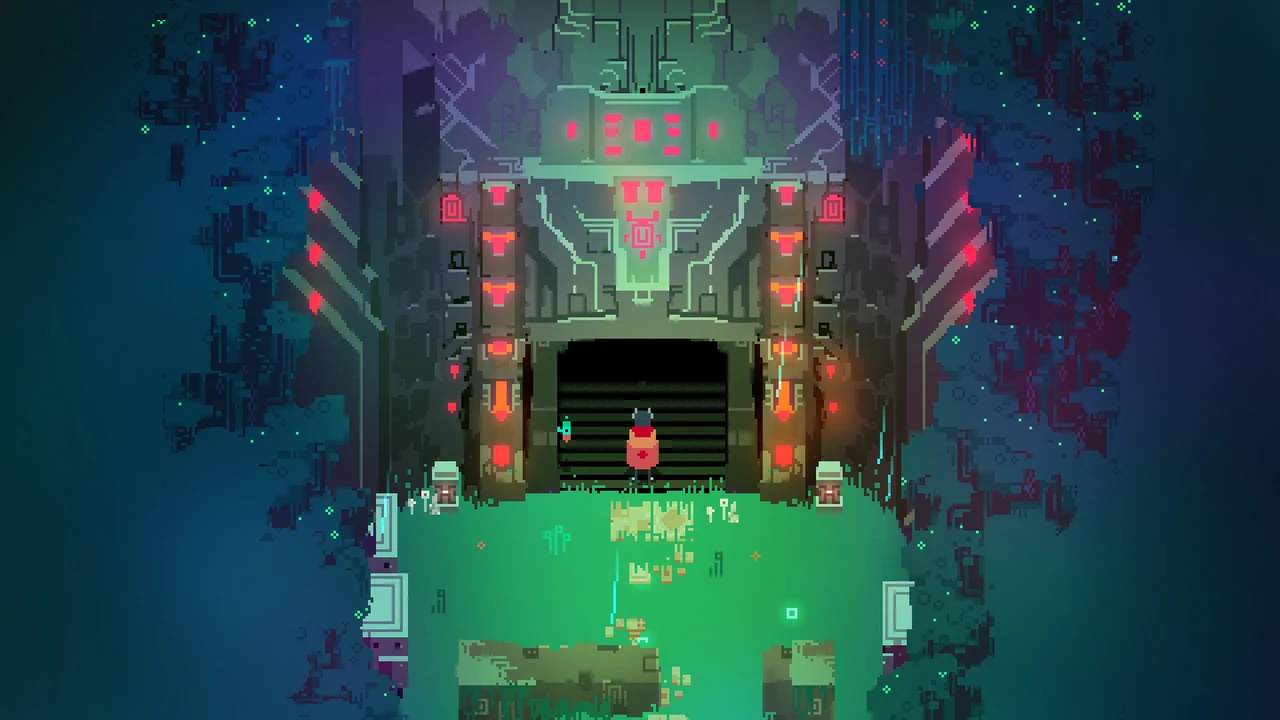
The setting's strongest quality is the way its visual identity supports exploration. Distinctive architecture and bold colour help locations remain memorable, while fragments of ruined machinery suggest a larger history without spelling out every event. Branching paths give the player reasons to investigate beyond the most obvious route, and equipment discoveries connect that curiosity with practical development. The combat and movement keep travel physically involving, so reaching an unfamiliar landmark feels earned rather than merely scheduled. The world also benefits from leaving some meaning open. A scene can remain suggestive after its immediate gameplay purpose is understood, encouraging attention to the environment instead of treating it as an obstacle course. For explorers comfortable with an oblique presentation, the result is a coherent destination whose atmosphere and danger reinforce the same sense of travelling through the remains of something much larger.
A vivid ruin rather than a neutral backdrop
The restrained explanation can make both navigation and interpretation frustrating. A player may recognise that a location matters without knowing what further action or discovery it requires. Returning to uncertain routes can become repetitive when several possibilities remain unresolved at once. Demanding combat also interrupts exploration for anyone whose main interest lies in the scenery or history. Understanding a region does not remove the need to execute movement and attacks reliably within it. The visual style is evocative, but its abstraction will not provide the same clear narrative orientation as detailed dialogue or explicit quest instructions. This is a game that expects the player to keep moving through partial understanding. The recommendation becomes less strong when uncertainty feels like missing information rather than atmosphere, or when difficult encounters regularly prevent curiosity from turning into a successful journey.
For players who accept the unknown
Choose Hyper Light Drifter if you enjoy exploring a place whose history remains partly beyond reach. It suits players attracted to memorable ruins, economical storytelling and routes that reward close observation. Comfort with demanding action is equally important, because the world communicates vulnerability through combat as well as imagery. Readers seeking a clear narrative tour or a low-pressure sightseeing experience should weigh that combination carefully. The game is particularly effective when a suggestive landmark can be interesting without an immediate explanation attached to it. A practical approach also helps: remember unresolved connections and use each new capability as a reason to reconsider them. For explorers willing to accept that mixture of uncertainty and execution, the journey offers a strong sense of place, with discoveries that feel embedded in a distinctive ruined world rather than distributed along a routine checklist.
The verdict
A visually memorable expedition through an evocative ruined world. Branching routes and practical discoveries reward curiosity, while demanding action and limited explanation make the journey deliberately resistant.
Reasons to play
- Distinctive landmarks make the ruined regions memorable
- Exploration connects with useful equipment discoveries
- Environmental storytelling preserves a convincing sense of mystery
Reasons to think twice
- Navigation and meaning can remain uncertain at the same time
- Difficult encounters may interrupt an exploration-led play style
See the game
Assist & accessibility
Explore the available settings and control options on the official game page before choosing your setup.
Parents’ guide
Players: Single-player · Multi-player · Shared/Split Screen PvP · Co-op · Shared/Split Screen Co-op. No in-game purchase marker in the checked Steam listing. Separate downloadable content may be sold.
Age classification: 12. Nintendo Switch Special Edition edition; not a separate PC classification
A useful starting tip
Record a blocked route or suspicious landmark before moving on, so a later upgrade has an obvious place to investigate.
A different direction
Compare this with Death's Door: A characterful action expedition through compact, memorable regions. Shortcuts and new capabilities make exploration useful, while its focused scale and demanding encounters favour players who enjoy fighting as part of the journey.
Official sources
Reviewed: November 2026
You might also like
 Hollow KnightRead review →
 TUNICRead review →
 ANIMAL WELLRead review →