THE DESTINATION REPORT / WORLD WANDER LEDGER
Sable
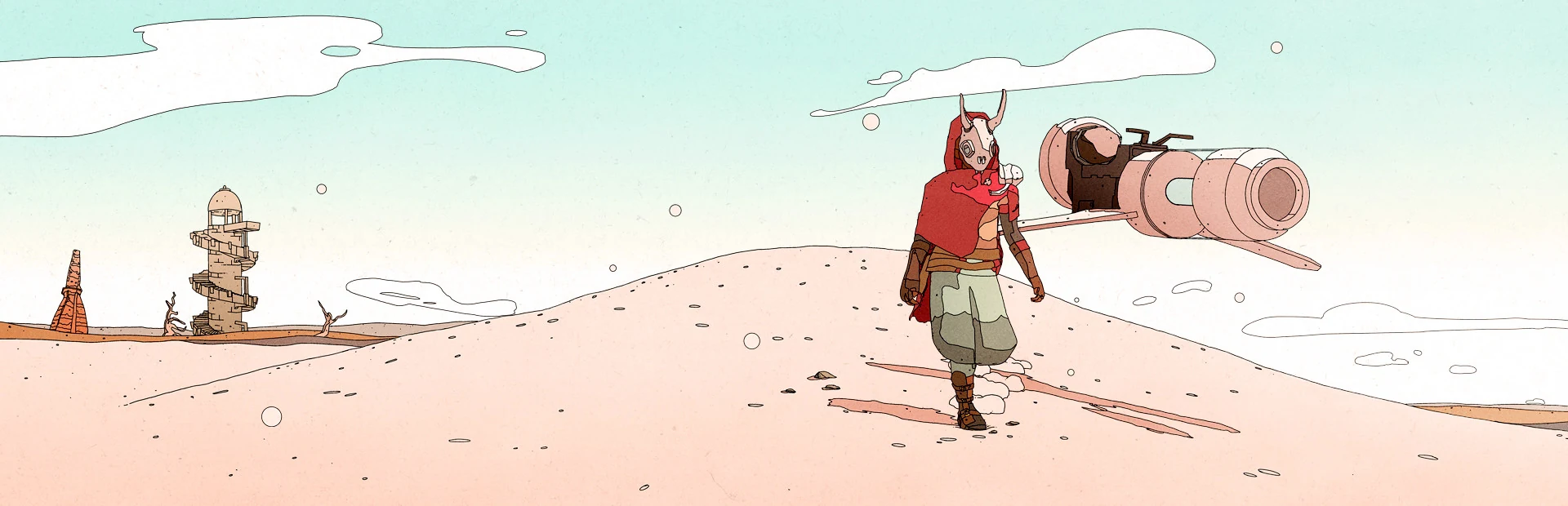
A distinctive desert for self-directed exploration. Hoverbike travel and climbing make landmarks rewarding at different scales, while the loose structure depends on the player supplying curiosity and a personal sense of direction.
Game facts
- Developer
- Shedworks
- Publisher
- Raw Fury
- Released
- 23 September 2021
- Platforms
- Windows (Steam edition)
- Model
- Paid game
- PEGI
- 3 — Xbox UK edition edition; not a separate PC classification
- Players
- Single-player
- Length
- Short
- Difficulty
- 1 / 5 · Approachable
- Steam Deck
- Verified
PEGI source ↗ · Steam Deck status source ↗
Edition: Base game
The score, explained
The interest and responsiveness of the core decisions and actions.
How progression, exploration and goals fit together.
The coherence of the visual, musical and narrative presentation.
How clearly the game explains its rules and offers useful ways to engage.
The depth of optional goals, alternative approaches and reasons to return.
A journey you give direction to
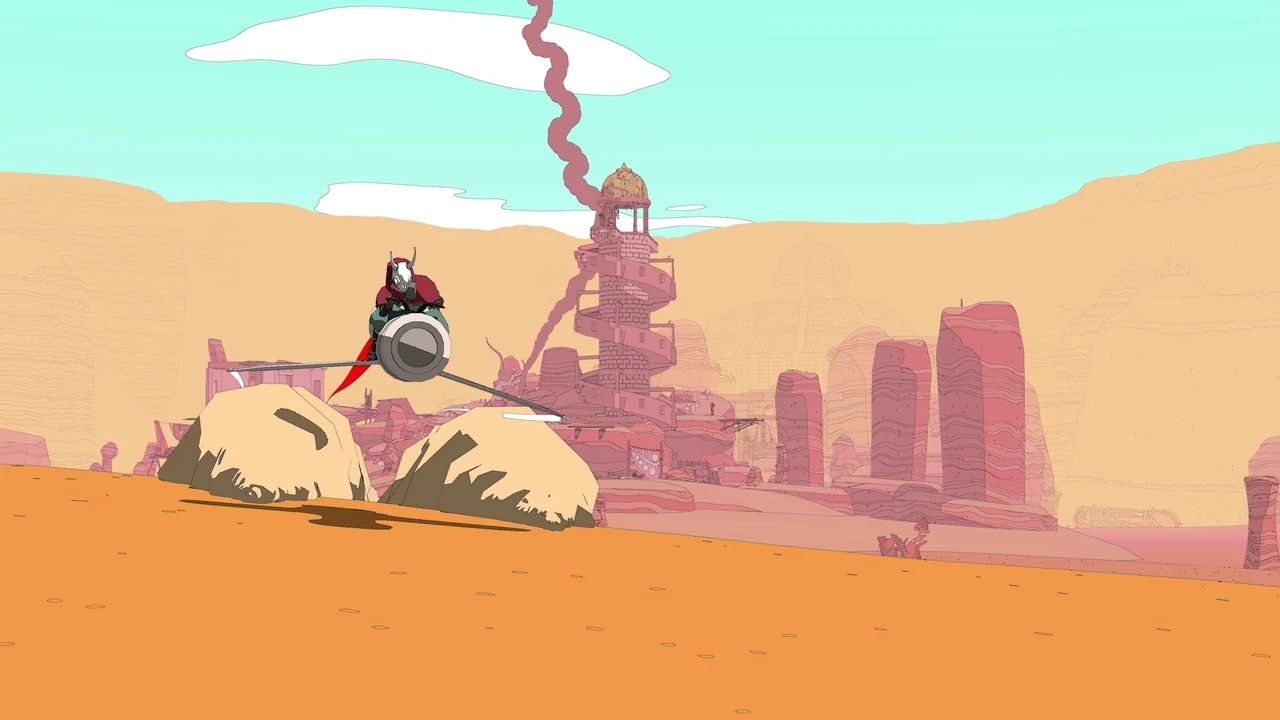
Sable introduces its desert as a collection of possible directions rather than a tightly ordered chain of emergencies. The hoverbike makes distant landmarks inviting, while climbing provides a slower, more intimate way to investigate what has been reached. Early encounters and tasks supply reasons to travel, but much of the opening's appeal comes from choosing a visible destination and deciding to learn what is there. The gliding journey is also connected to identity, with masks and personal choices giving exploration a purpose beyond completing a map. For a traveller, the first useful habit is to resist turning every landmark into a simultaneous obligation. A single interesting structure can support an expedition of its own. The game begins to work when the desert feels like a place through which a personal route can be chosen, rather than a space waiting for the next compulsory marker.
Collecting possibilities rather than a single build
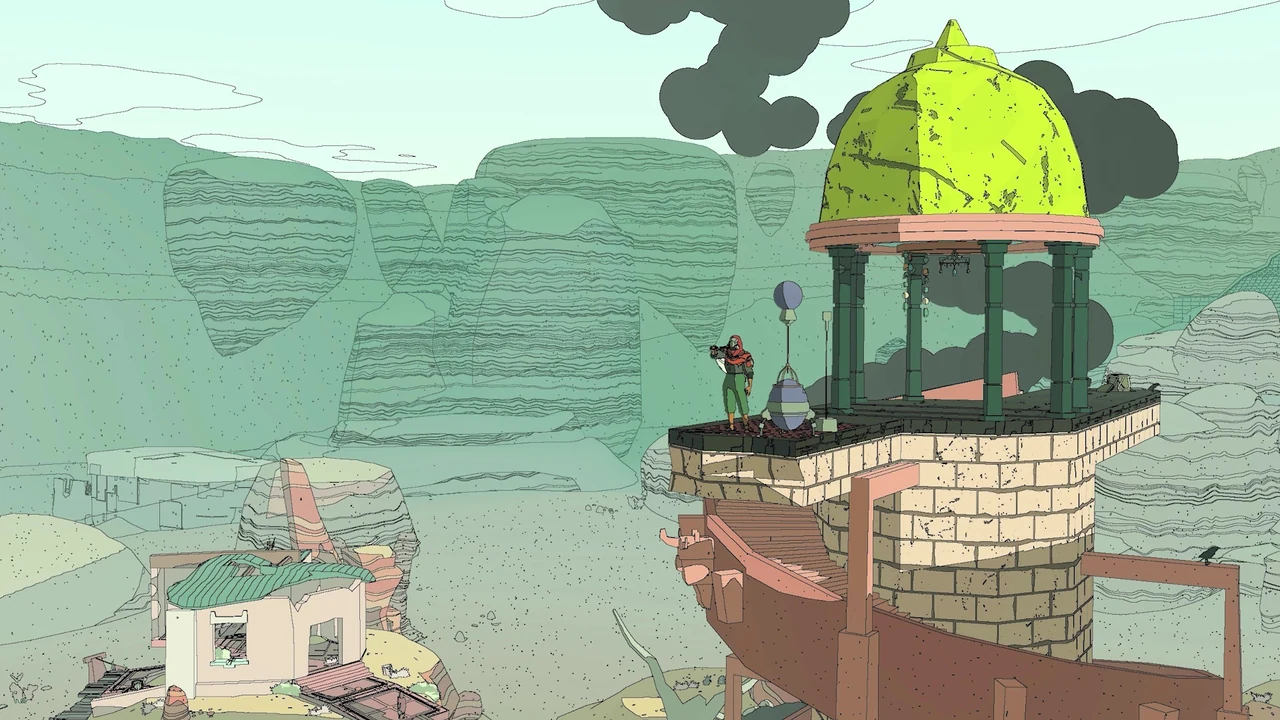
The contrast between fast travel across open ground and slower climbing makes the landscape satisfying at different scales. A distant silhouette becomes a destination, then a surface with routes and details worth examining. This supports a strong sense of personal discovery because the player often chooses the order and emphasis of those visits. The world's visual identity also helps landmarks remain memorable, making a journey feel directed by curiosity rather than by a dense interface. Conversations, tasks and masks connect the places encountered with the protagonist's search for a role, giving movement a gentle narrative thread. Sable is particularly effective when exploration is allowed to breathe. The lack of constant combat pressure leaves room to look at a place, decide what seems interesting and pursue that impression without treating every pause as a delay in reaching a more important confrontation.
A landscape made to be noticed
Freedom of direction can become a shortage of momentum when the player does not have a personal destination in mind. The desert offers many invitations, but it does not always insist strongly on which one should matter next. Readers who rely on frequent combat rewards or escalating mechanical challenges may find the journey too loose. Climbing and travelling also recur extensively, so enjoyment depends on those activities remaining appealing after the novelty of the scenery settles. The identity theme supplies context, but it does not turn the world into a tightly paced dramatic campaign. Some players will appreciate the space that leaves; others will experience it as aimlessness. Sable is therefore a conditional recommendation despite its distinctive setting. The desert rewards curiosity, but it expects the traveller to bring enough of that curiosity to organise the journey into something personally meaningful.
Best when wandering has a purpose for you
Choose Sable if you like deciding what an expedition should be about. It suits explorers who can look across a landscape, select a landmark and enjoy the process of discovering why that place is interesting. The combination of hoverbike travel and climbing gives the desert both breadth and close-up detail, while the search for identity adds a quiet purpose to the route. Players seeking frequent fights or a strongly directed sequence of objectives should consider another adventure. This one works best with a self-directed temperament and a willingness to stop without demanding an immediate reward. A useful approach is to finish investigating one chosen destination before chasing every other silhouette. For travellers who value that kind of freedom, Sable offers a distinctive world in which the shape of the journey can reflect the player's own interests rather than a single prescribed itinerary.
The verdict
A distinctive desert for self-directed exploration. Hoverbike travel and climbing make landmarks rewarding at different scales, while the loose structure depends on the player supplying curiosity and a personal sense of direction.
Reasons to play
- Visible landmarks support personal choices about where to travel
- Fast travel and close climbing give the landscape different scales
- Masks and identity connect discovery with a quiet narrative purpose
Reasons to think twice
- Open direction can feel aimless without a chosen goal
- Players seeking frequent combat rewards may find the pace too loose
See the game
Assist & accessibility
Explore the available settings and control options on the official game page before choosing your setup.
Parents’ guide
Players: Single-player. No in-game purchase marker in the checked Steam listing. Separate downloadable content may be sold.
Age classification: 3. Xbox UK edition edition; not a separate PC classification
A useful starting tip
Choose one visible landmark and investigate it fully before turning the whole desert into a list of competing destinations.
A different direction
Compare this with Jusant: A distinctive vertical expedition where climbing creates the sense of place. The tower's changing environments reward careful travel, provided the measured physical activity is as appealing as the views it reveals.
Official sources
Reviewed: November 2026
You might also like
 Hollow KnightRead review →
 TUNICRead review →
 ANIMAL WELLRead review →