
THE DESTINATION REPORT / WORLD WANDER LEDGER
Dragon's Dogma 2
A substantial expedition game whose physical encounters and pawn party can make travel memorable. Its strongest stories emerge on the road, while repeated journeys, limited information and a weaker main narrative make the friction divisive.
Game facts
- Developer
- CAPCOM Co., Ltd.
- Publisher
- CAPCOM Co., Ltd.
- Released
- 21 March 2024
- Platforms
- Windows (Steam edition)
- Model
- Paid game
- PEGI
- 18 · Violence, In-game Purchases — Steam UK listing
- Players
- Single-player
- Length
- Long
- Difficulty
- 4 / 5 · Challenging
- Steam Deck
- Unsupported
PEGI source ↗ · Steam Deck status source ↗
Edition: Base game
The score, explained
The interest and responsiveness of the core decisions and actions.
How progression, exploration and goals fit together.
The coherence of the visual, musical and narrative presentation.
How clearly the game explains its rules and offers useful ways to engage.
The depth of optional goals, alternative approaches and reasons to return.
The core experience
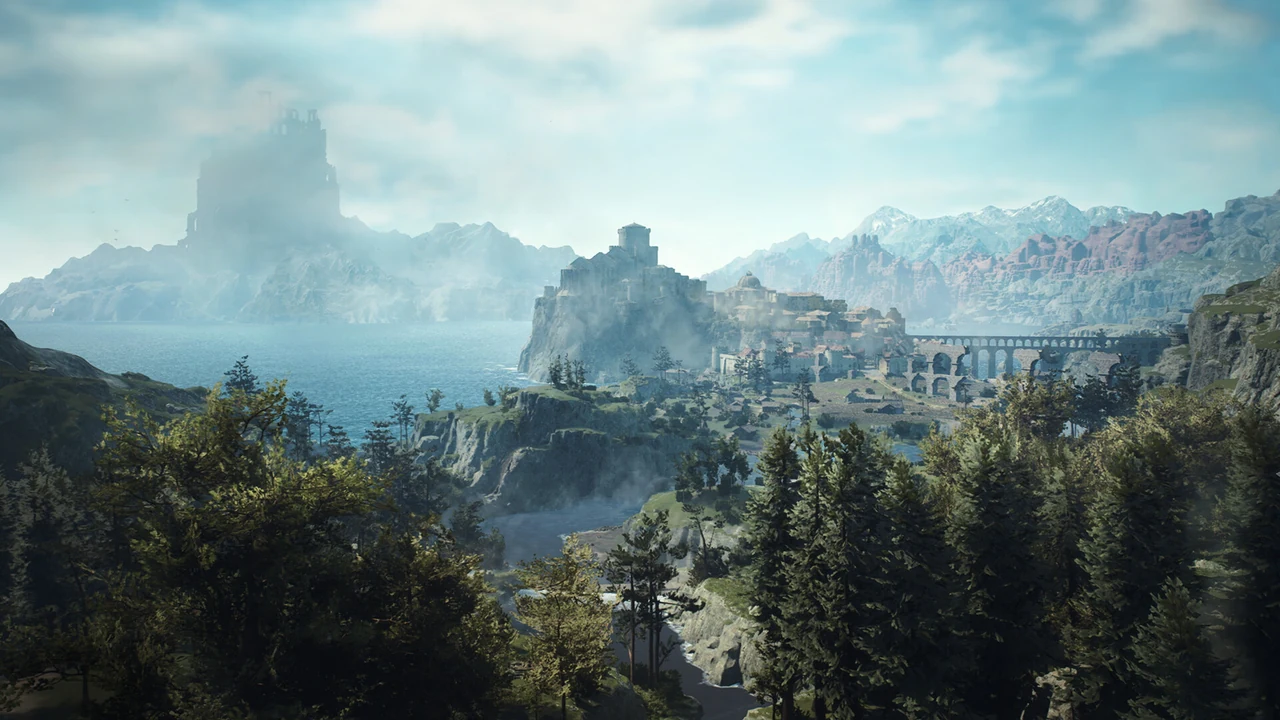
Dragon's Dogma 2 makes leaving a settlement feel like preparing an expedition. The character's vocation, the party's pawns and the supplies being carried all influence what a trip can reasonably accomplish. Roads provide an initial direction, but creatures, terrain and unexpected encounters can change the practical route. The opening encourages attention to distance and readiness rather than assuming every visible destination is a quick errand. Travel also has a physical quality: large enemies occupy space, slopes and narrow passages affect encounters, and the party's behaviour contributes to how a journey unfolds. For an explorer, the first lesson is that the world is not merely a map of objectives waiting to be collected. Reaching a place requires negotiating the ground between destinations, and that negotiation can become the most memorable part of the expedition.
Where it excels
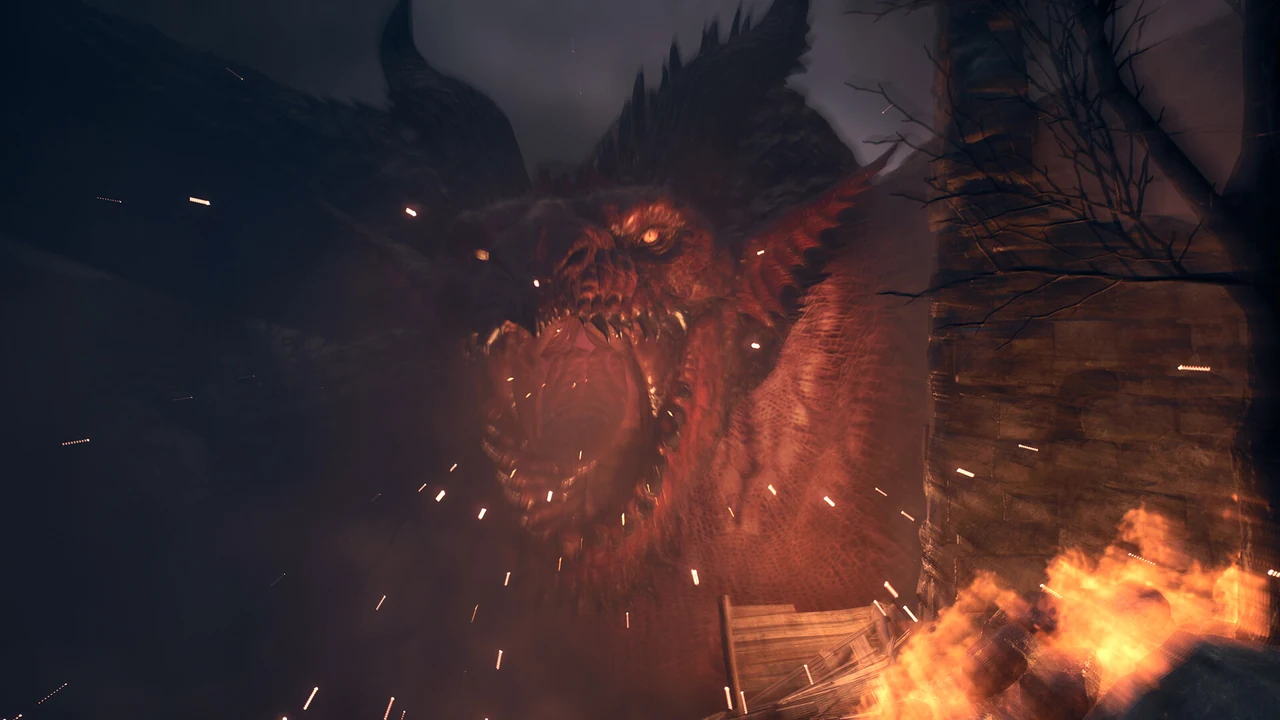
The strongest quality is the capacity of travel to generate its own incidents. A planned route can become a fight, a detour or a decision about whether the party is still prepared to continue. Pawns contribute skills and behaviour that make the group feel like more than a single character with extra damage attached. Large creatures also give encounters a physical presence, reinforcing the sense that the landscape is inhabited by things that can interrupt an itinerary. The world benefits from this friction when it produces a story the player did not explicitly set out to find. A destination remains useful, but the journey gains significance through what happens along the way. Dragon's Dogma 2 is most persuasive as an expedition game in which preparation, party composition and the practical realities of terrain can turn familiar travel into an unpredictable undertaking.
The trade-offs
The friction that makes an expedition memorable can also become inconvenient repetition. Returning along familiar routes, managing supplies and dealing with limited information will not always feel like meaningful discovery. A player with a specific objective may resent another interruption more than they appreciate the world's independence. The central narrative also struggles to match the distinctiveness of the physical encounters and emergent travel. Readers looking for a tightly paced dramatic campaign may therefore judge the journey less favourably than explorers interested in its systems. The party's contributions can be useful without being perfectly controllable, which adds another layer of uncertainty. This is not a world designed to make every errand efficient. Its appeal depends on whether the obstacles between destinations remain interesting after the player already knows where they want to go and why they want to arrive there.
Who should play it
Choose Dragon's Dogma 2 if preparation and interruption are welcome parts of exploration. It suits players who enjoy forming a capable party, setting a practical destination and discovering what the route demands once travel begins. The physical encounters and pawn system are especially appealing when a journey's unplanned events matter as much as its final reward. Readers who want quick errands, abundant clarity and a consistently strong central story should weigh the inconvenience carefully. The game asks for patience with a world that can resist the intended schedule. A sensible approach is to consider supplies and party roles before leaving safety, then remain willing to change the plan. For travellers comfortable with that relationship, the landscape becomes more than connective space: it is an active part of the adventure, capable of turning a familiar road into a distinct expedition.
The verdict
A substantial expedition game whose physical encounters and pawn party can make travel memorable. Its strongest stories emerge on the road, while repeated journeys, limited information and a weaker main narrative make the friction divisive.
Reasons to play
- Travel can generate meaningful unplanned encounters
- Party composition changes the practical character of an expedition
- Large creatures and terrain give the world physical presence
Reasons to think twice
- Repeated routes and supply management can feel inconvenient
- The central narrative is less distinctive than the journeys between objectives
See the game
Assist & accessibility
Explore the available settings and control options on the official game page before choosing your setup.
Parents’ guide
Players: Single-player. Includes optional in-game purchases.
Age classification: 18. Violence · In-game Purchases Steam UK listing
A useful starting tip
Before leaving a settlement, check your supplies and your party's roles, then choose a destination you can reasonably reach.
A different direction
Compare this with Hollow Knight: A richly connected underground destination that rewards learning its geography. New movement options make old routes meaningful again, while demanding combat and restrained guidance give exploration a substantial cost.
Official sources
Reviewed: November 2026
You might also like
 Hollow KnightRead review →
 TUNICRead review →
 ANIMAL WELLRead review →